How Philosophy Shapes the Gender Debate
At its core, gender is a philosophical issue. Gender is not merely a medical issue, a political issue, or a cultural talking point. And if we miss that, we will misunderstand why this debate has become so emotionally charged, so confusing, and so far-reaching.
Pastor Kerry Decker of Beyond Trans has spent decades helping people navigate life’s hardest challenges with biblical clarity and personal compassion. In this series, he reflects on his ongoing ministry to a Trans Christian man called "Chris" who he has been counseling regularly since 2018. Chris has given permission for his story to be shared anonymously, and his journey has become a sobering lens through which to think carefully about gender, identity, truth, and human flourishing.
Ideas are not just ideas. They shape lives. They shape families. They shape medicine, law, education, and even the language people use every day. If we want to understand the modern gender debate, we have to look beneath the slogans and ask what beliefs are driving it.
The human search behind the gender question
Before getting into philosophy, it helps to start with something more basic. Most people want the same thing: an abundant life. Although people differ on how to get there the desire itself is universal.
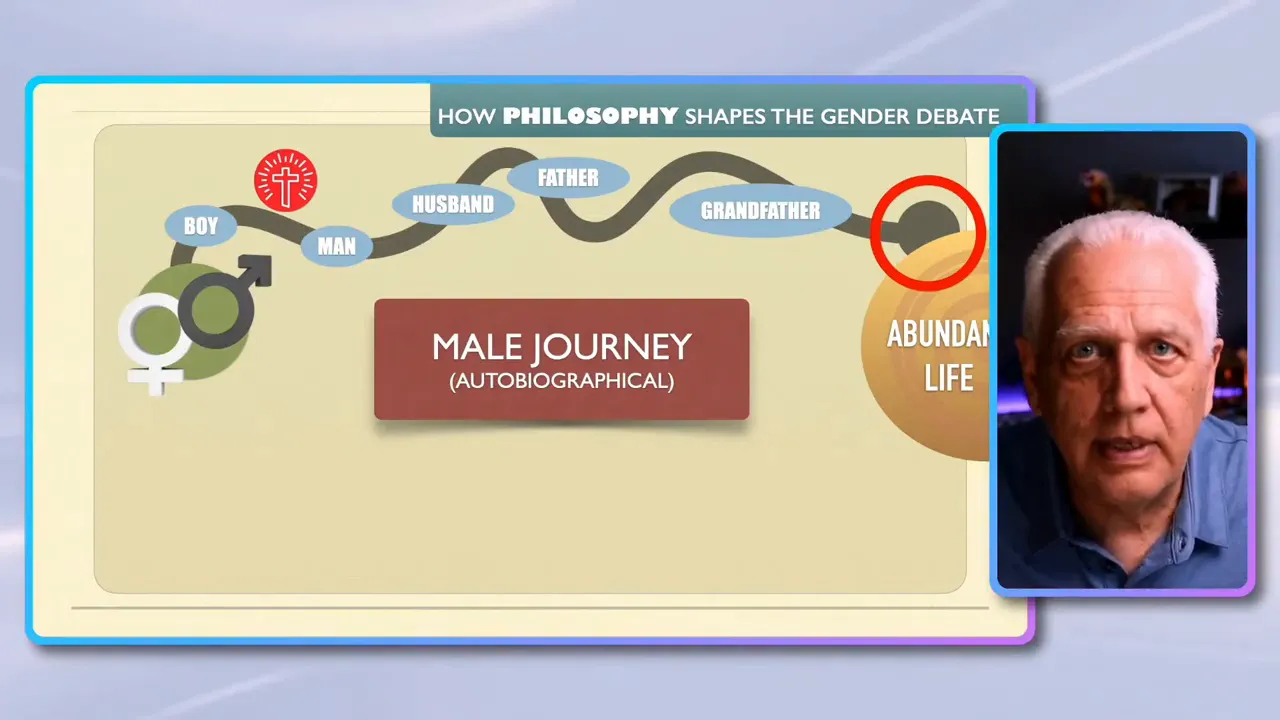
The essential male journey in simple terms:
- A baby boy is born.
- That boy grows into a man.
- He may become a husband.
- He may become a father.
- If he lives long enough, he may become a grandfather.
Not every man marries, and not every man becomes a father. But the movement from boy to man is part of the essential male journey. Kerry was born a boy, became a man, then a husband, father, and grandfather. But none of those milestones, important as they are, gave him abundant life.
When Kerry was 17 he committed himself to Jesus and began experiencing an abundant life. In John 10:10, Jesus says that He came so people may have life more abundantly. Marriage, parenthood, career, and personal milestones cannot complete a person. Christ alone can do that.
The cost of transition: Chris' story
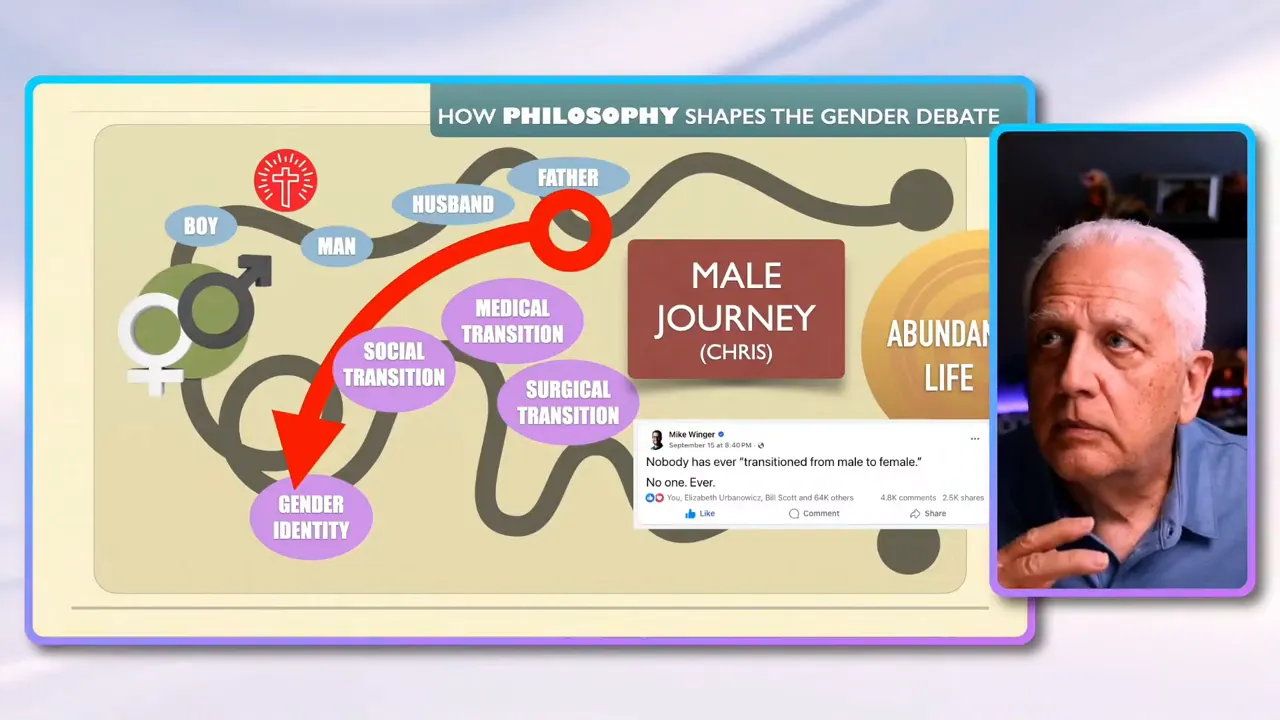
Chris began on a similar path. He was born male, became a husband, fathered four children, and also committed his life to Christ at 17. But after becoming a father, his life took a detour. Chris became increasingly consumed by gender identity and eventually pursued every major stage of transition including:
- Social transition
- Medical transition, including hormone use
- Surgical transition, including procedures in Thailand
A man can alter his appearance, undergo hormones, or have surgery, but he does not become female. Biological sex is not “assigned at birth.” It is discovered at birth.
That distinction matters because language often drives the debate. If sex is spoken of as "assigned", it sounds arbitrary, as though someone in authority simply made a choice. But biological reality is objective and gender is rooted in the body (chromosomes and reproductive organization), even when fertility is impaired.
For example, Chris, although he has surgically transitioned to present as female could still have issues with his prostate. The reality is that however far a person goes in transition, the underlying sexed body remains relevant. You cannot change gender
Chris’ transition also created relational damage. It destroyed his marriage and alienated him from his children and family of origin. It left Chris wanting to end his life. But Chris later recommitted his life to Christ and says that returning to the Lord, not transitioning, is what gave him an abundant life.
3 cultural messages fueling confusion about gender
The current gender crisis is part of a larger cultural breakdown, especially around male roles in the family, and their identity. Society has accepted some harmful ideas as true.
1. Dads are expendable
One of the biggest obstacles to healthy adult development is a broken relationship with one’s father. Too many dads are absent, neglectful, or abusive. The cultural message that fathers do not matter has left deep wounds.
2. Marriage is revisable
Marriage has been reshaped dramatically. Divorce once was rare but has become commonplace. Society has steadily weakened the permanence and meaning of marriage. That instability has consequences for how people think about commitment, identity, and family structure.
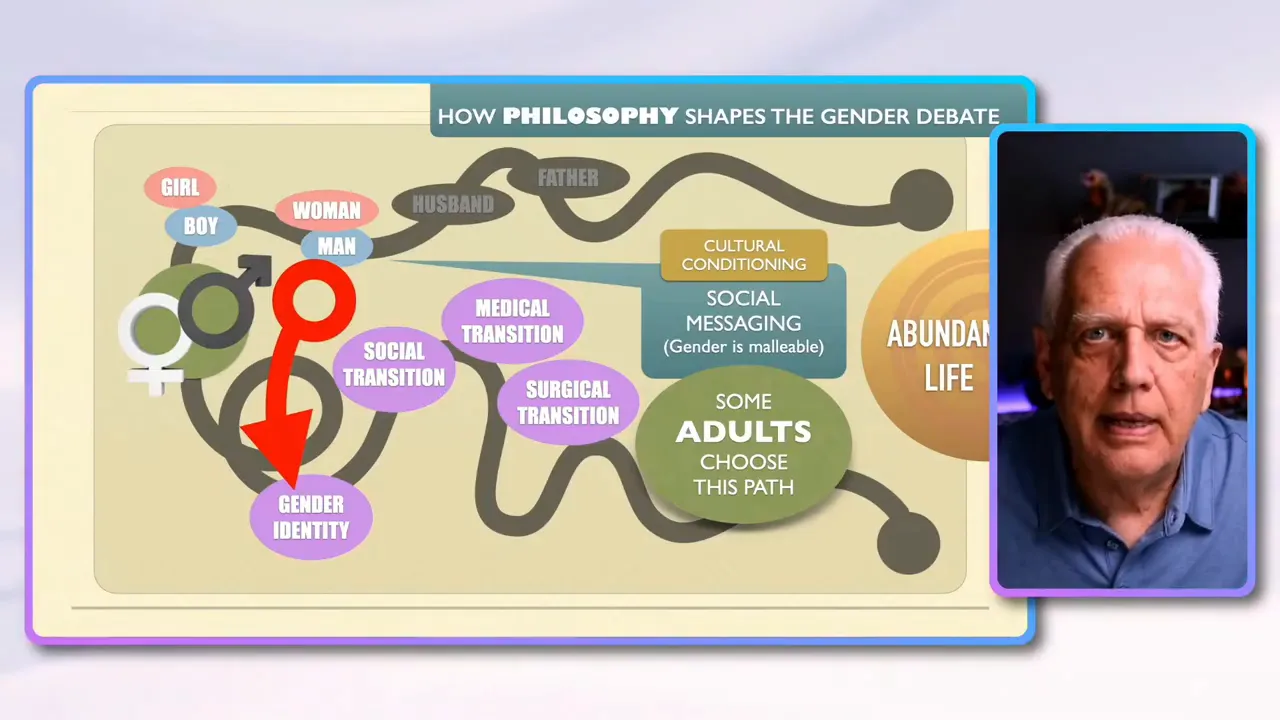
3. Gender is malleable
The third message is: gender can be changed, redefined, or self-created. This message is touted in entertainment, media, politics and medicine. It often reaches children, and is placed on parents through fear-based questions and institutional pressure.
The danger is that these choices have consequences that are irreversible. Once someone goes far enough down the transition path, some losses cannot be undone. Fertility may be lost, natural parenthood may no longer be possible. Even social de-transition may not restore all that has been damaged.
The philosophy behind modern gender ideology
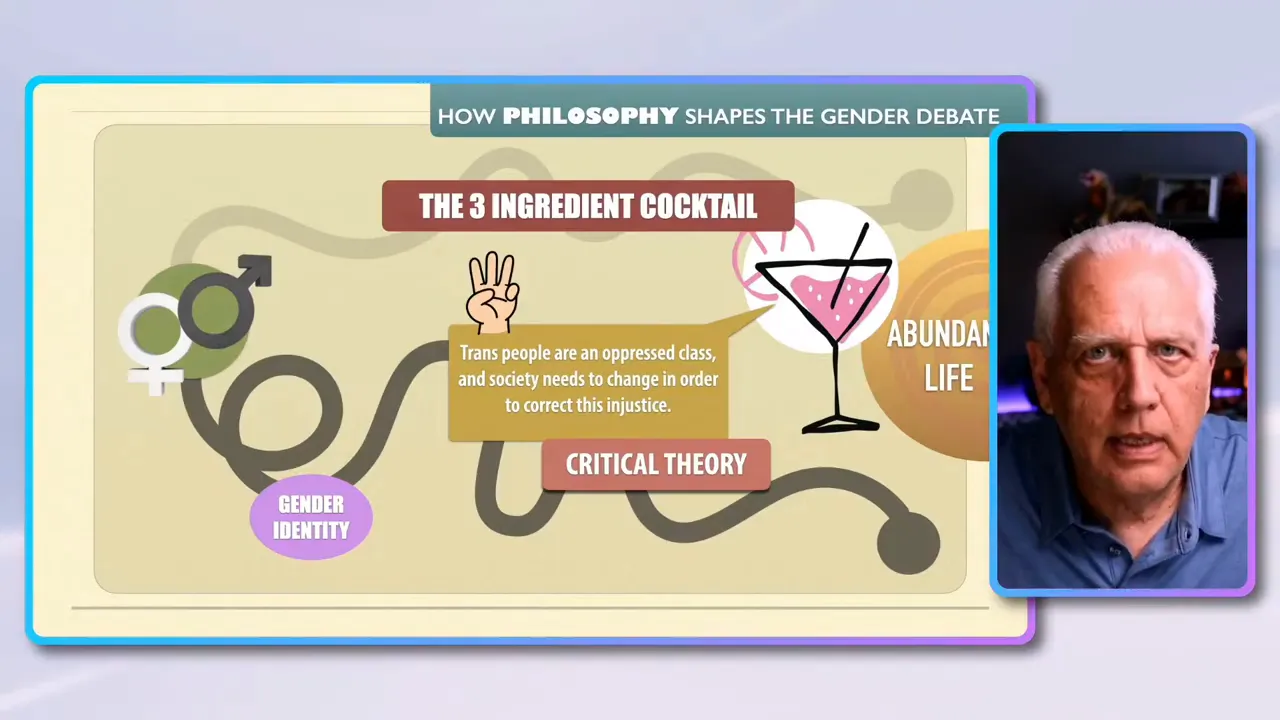
The gender debate is being shaped by a “three-ingredient cocktail” of philosophical ideas. These ideas may not always be named explicitly, but they are present in the assumptions behind the conversation.
1. Existentialism: existence precedes essence
The first ingredient is the belief that a person first exists and then creates who they are. In this view, there is no fixed human essence. Identity is chosen, constructed, or authored by the self.
This outlook is summarized as existence precedes essence. When applied to gender, it means that being born male or female does not define what one essentially is. The self decides.
2. Postmodernism: truth is personal
The second ingredient is the rejection of absolute truth. The modern gender conversation often treats biological reality as secondary to personal experience. People are encouraged to “find your truth” about gender.
This same philosophy runs into a problem: saying “there are no absolute truths” because that statement is itself an absolute truth. Either biological sex is more fundamental, or gender identity is more fundamental. Both cannot occupy the same place of ultimate authority because they are contradictory.
3. Critical theory: oppressed versus oppressor
The third ingredient is critical theory. Here, questions are framed less in terms of true and false or right and wrong, and more in terms of oppression and power. A minority group is viewed as oppressed by a majority, and institutions are expected to be realigned for the sake of justice and equity.
This helps explain why the gender debate has become so morally charged. Once the issue is framed as oppression, disagreement can be treated as harm, and affirmation becomes the highest social duty.
How philosophy turns into policy
Philosophy does not stay in classrooms. It moves into institutions. Philosophy shapes policies and practices.
That affects three major areas:
- Medicine and health care
- Law and politics
- Social interaction
At the center of gender ideology is one core claim: a person’s gender identity is more fundamental than biological sex. Once that claim is accepted, everything else follows. Gender becomes primary. Biology becomes negotiable. Institutions are expected to affirm self-declared identity.
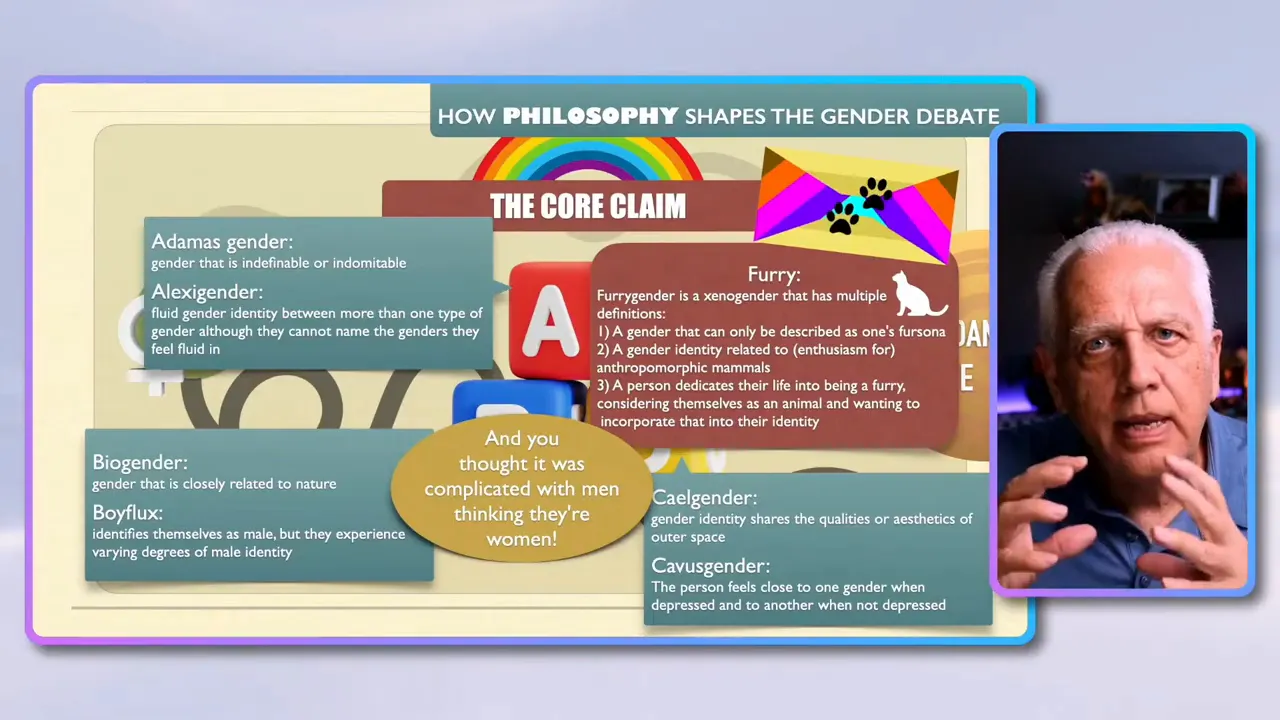
That is also why the number of genders becomes effectively limitless. Online gender lists and social platforms classify dozens, even hundreds, of identities. Some are tied to emotional states, aesthetics, or affinity with even nature or animals. Once gender is detached from biological sex, the concept expands without stable boundaries.
From there, the burden shifts to society. A person declares an identity, and everyone else is expected to recognize and affirm it. This blurs the line between rational self-understanding and mental distress, because questioning a claimed gender identity is increasingly treated as morally off-limits.
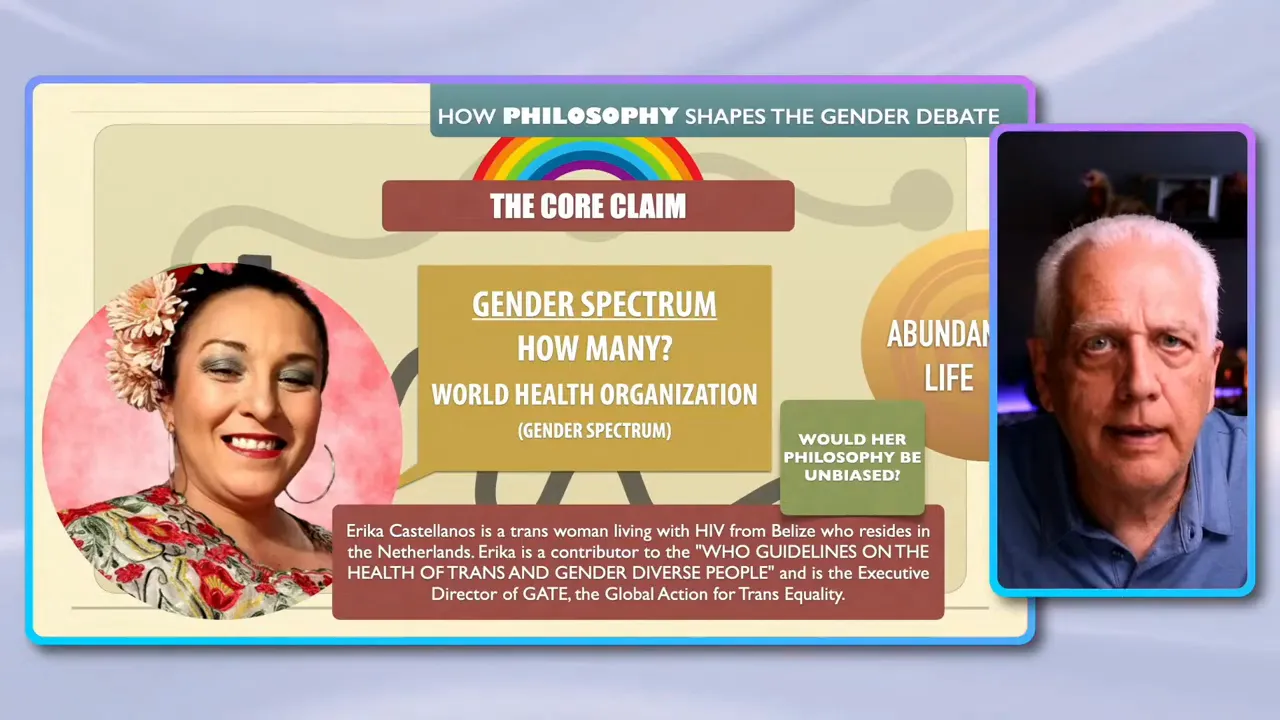
WHO is shaping global gender policy?
The World Health Organization presents gender as a spectrum while helping shape global policy on trans and gender-diverse health. Some of the people involved in developing such policies are openly trans activists or individuals deeply embedded in gender advocacy organizations.
Two cautionary stories
Let's look at two historical examples that we can learn from.
Lili Elbe
Lili Elbe, born Einar Wegener, was one of the earliest recipients of sex reassignment surgery in the early 1930s. Elbe underwent a series of operations, changed legal identity, and hoped to marry a man and even bear children. But Elbe died following a uterus transplant attempt in 1931. Surgery changed outward appearance and public presentation, but did not change gender itself.
Rosemary Kennedy
Rosemary Kennedy, was lobotomized in 1941 at the age of 23. At the time, lobotomy was promoted as a promising medical treatment. Her father authorized the procedure, and it left her permanently institutionalized.
Years later, her mother expressed her shame and regret saying, “Oh, Rosie, what did we do to you?”
Medicine and media praise interventions long before its side effects and repercussions are fully understood. Parents who permit/encourage their children to transition may one day ask a similar question about pediatric gender transition, "What did we do to you?"
Gender, truth, and compassion
The gender debate is not going away. But if it is going to be addressed honestly, it cannot be reduced to slogans, sentiment, or institutional pressure. It has to include reality, language, ethics, consequences, and the philosophical beliefs underneath the whole system.
Biological reality matters. Language matters. Philosophy matters. And when false ideas about gender become entrenched in culture, they eventually shape practices that affect real bodies and real families.
Remember this is about people. Chris is not a theory. He is a person. His story includes pain, loss, regret, and eventually renewed faith. Kerry believes with conviction that abundant life is not found in remaking the body to match an inner identity, but in finding your identity with Christ.
That is where true abundant life begins.
New Destiny Coaching can help YOU! |
|
Find out how... |
| Click Here |

