The Great Gender Debate: Who Decides?
The deepest questions usually sit underneath the loudest debates. Your answer to the question of how gender is determined helps shape the path you take when it comes to politics, religion, social interactions, and much more. Your stance impacts how you relate to others, what you believe, and even how you vote.
Pastor Kerry Decker of Beyond Trans challenges us to think clearly and love deeply. He helps people navigate life’s challenges. Since 2018, Kerry has been ministering to a man who underwent sexual reassignment surgery in 2003, began hormone replacement therapy in 1997, and left his family in 1995 to fully enter a transgender lifestyle. Kerry's ministry gives weight, sobriety, and compassion to the insights he has gained.
This is not abstract for him. It is personal. And precisely because it is personal, he argues that we must think carefully. The question of gender is important not just for the Trans community but to the Christian community as well. Christians are called to be wise and to love, to show compassion, and to minister to those in need. So, let's explore this question together, Who decides how to answer the gender question?
The Real Starting Point in the Trans Conversation
At the center of the Trans debate is a question many people assume has already been settled: what is gender?
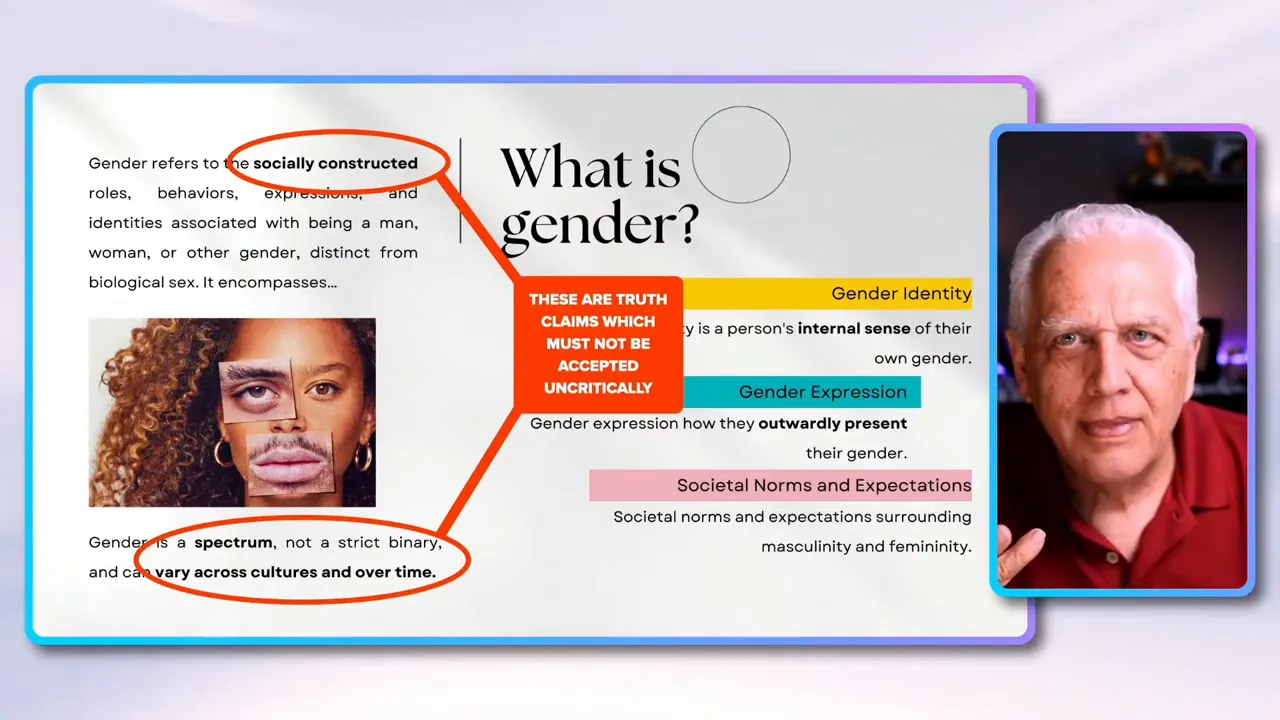
A common definition says gender refers to socially constructed roles, behaviors, expressions, and identities associated with being a man, woman, or some other gender, distinct from biological sex. It includes gender identity, gender expression, and social norms about masculinity and femininity. It also often includes the claim that gender is a spectrum rather than a binary and that it varies across cultures and over time.
Kerry’s point is simple but important: these are not neutral descriptions. They are truth claims. Truth claims should never be accepted uncritically simply because they appear in a definition, a textbook, a website, or a policy statement. A healthy society needs people who ask questions, test assumptions, and insist on good reasons for what they believe.
That is especially true in the Trans discussion because the answer you choose at the beginning shapes everything that follows.
The Two Competing Starting Points
Kerry frames the issue as a choice between two rival starting points:
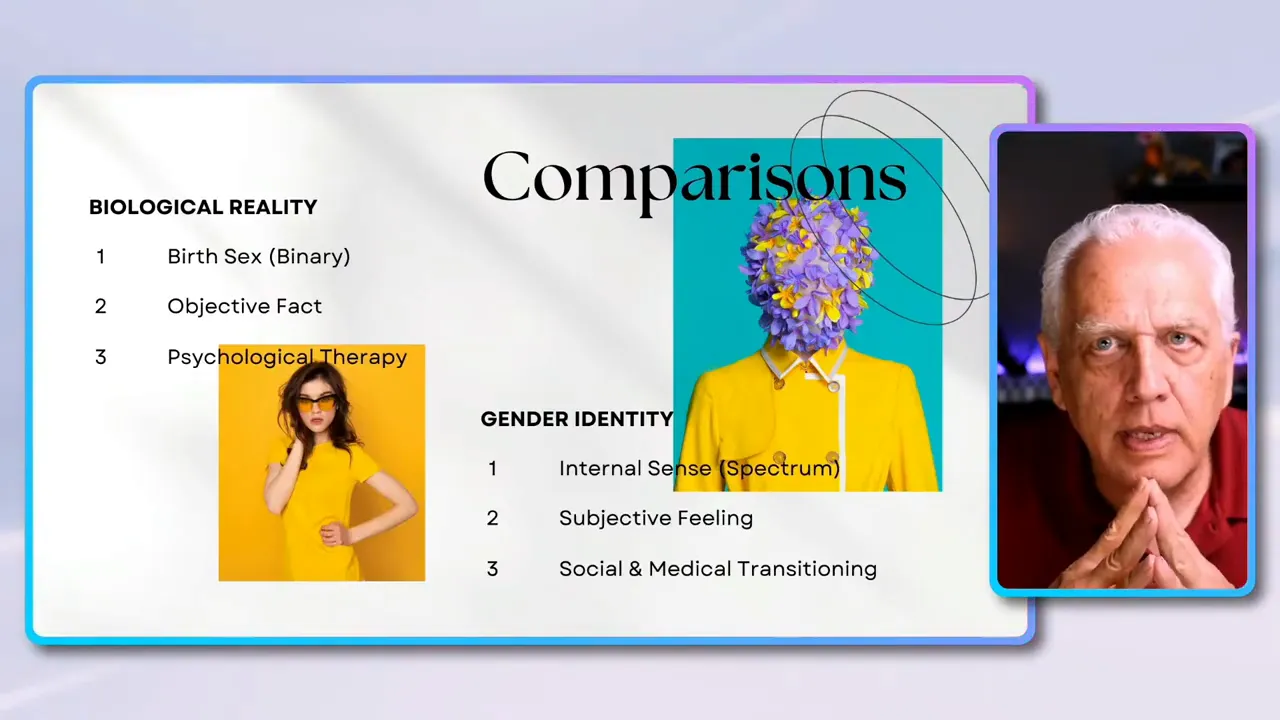
- Gender identity says: Internal sense of self, subjective feeling, and social and medical transitioning should be the primary factors in how a person is understood and treated.
- Biological reality says: Birth sex, objective fact, and psychological therapy should be the primary factors in how a person is understood and treated.
Your starting point determines your path, your beliefs, and your conclusions. That is why the opening question matters so much. If a culture treats internal identity as supreme, it will travel in one direction. If it treats biological sex as foundational, it will travel in another.
The main areas impacted by your beliefs
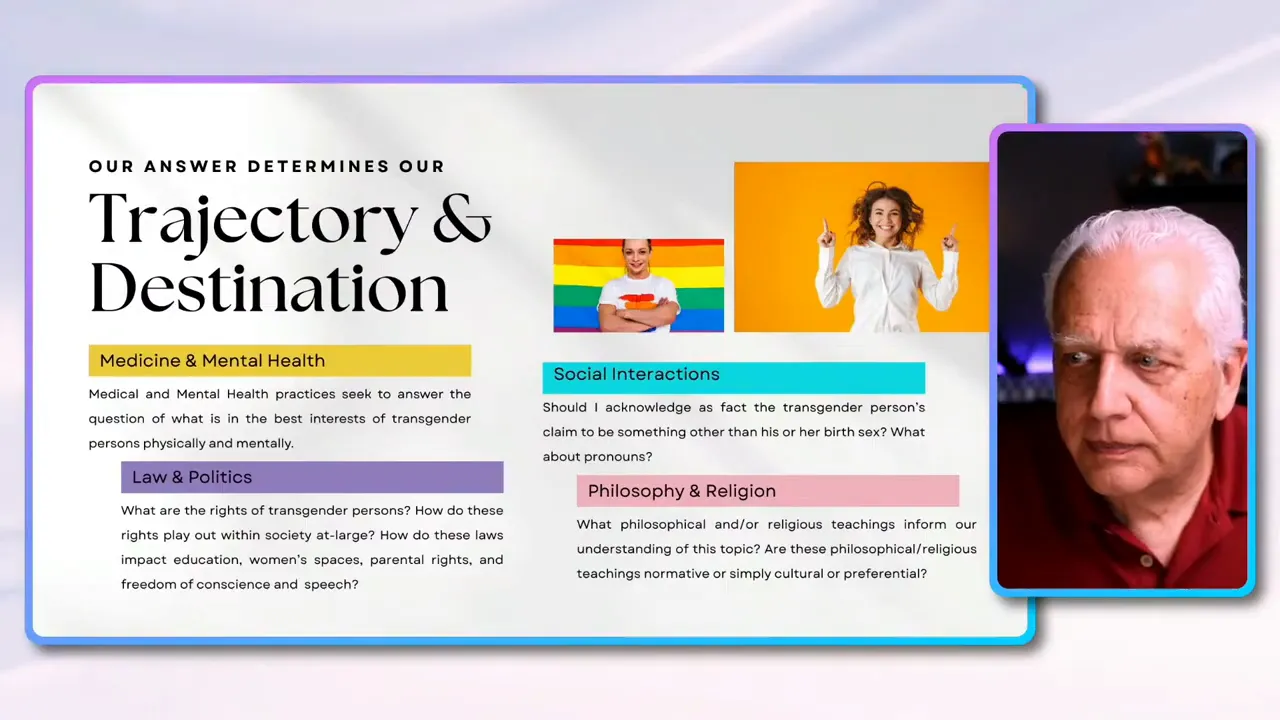
This initial decision does not remain theoretical. It works itself out in several major areas of life.
1. Medicine and mental health
How should people with gender dysphoria be helped? If gender identity is treated as determinative, then social and medical transition often become the preferred pathway. If biological reality is treated as determinative, then psychological therapy becomes a central consideration.
This is not a small disagreement. It reflects two very different understandings of what a person is, what distress means, and what healing should look like.
2. Law and politics
The gender issue shapes public policy at every level. Questions arise about:
- rights claims
- education policy
- women’s spaces: sports, locker rooms, bathrooms, etc.
- parental rights
- freedom of conscience
- freedom of speech
Kerry’s point is that these conflicts do not appear out of nowhere. They are the fruit of a prior answer to the deeper question.
3. Daily social interaction
The debate reaches into ordinary conversation. Should a person affirm as fact another person’s claim to be something other than his or her birth sex? What about names and pronouns?
Kerry practices "pronoun hospitality". When speaking with a Trans person he uses their preferred pronouns. But when he refers to them he uses the pronouns that match their birth sex. Whether one agrees or disagrees, the point is that social language is not a trivial matter. It reflects convictions about what is true and what should be affirmed.
4. Philosophy and religion
Underneath the gender debate are large worldview questions. What philosophical assumptions shape the idea of gender identity? What assumptions shape the appeal to biology? Are these views morally binding, or are they simply cultural preferences?
These are hard questions, but they are worth asking because they help expose the roots of the disagreement.
Biological Reality and Gender Identity make different claims
Compare the two approaches:
Biological reality is rooted in objective facts. Chromosomes can be identified. Hormonal patterns can be measured. Phenotype can be observed. For the overwhelming majority of people, sex is not assigned in the sense of being invented. It is discovered at birth, and sometimes even before birth through ultrasound.
Gender identity, by contrast, is not externally measurable in the same way. It is known only through self-disclosure. Unless a person tells you what his or her internal sense of gender is, you do not have access to it. In that sense, it is rooted in subjective feeling.
On one side are objective facts. On the other side are subjective feelings. The Trans debate often blurs that distinction. We should be clear.
What does “I feel like a woman” mean?
One of the most thought-provoking parts of Kerry’s approach is asking clarifying questions, respectfully and without hostility.
When a male says, “I feel like a woman,” respond with curiosity.
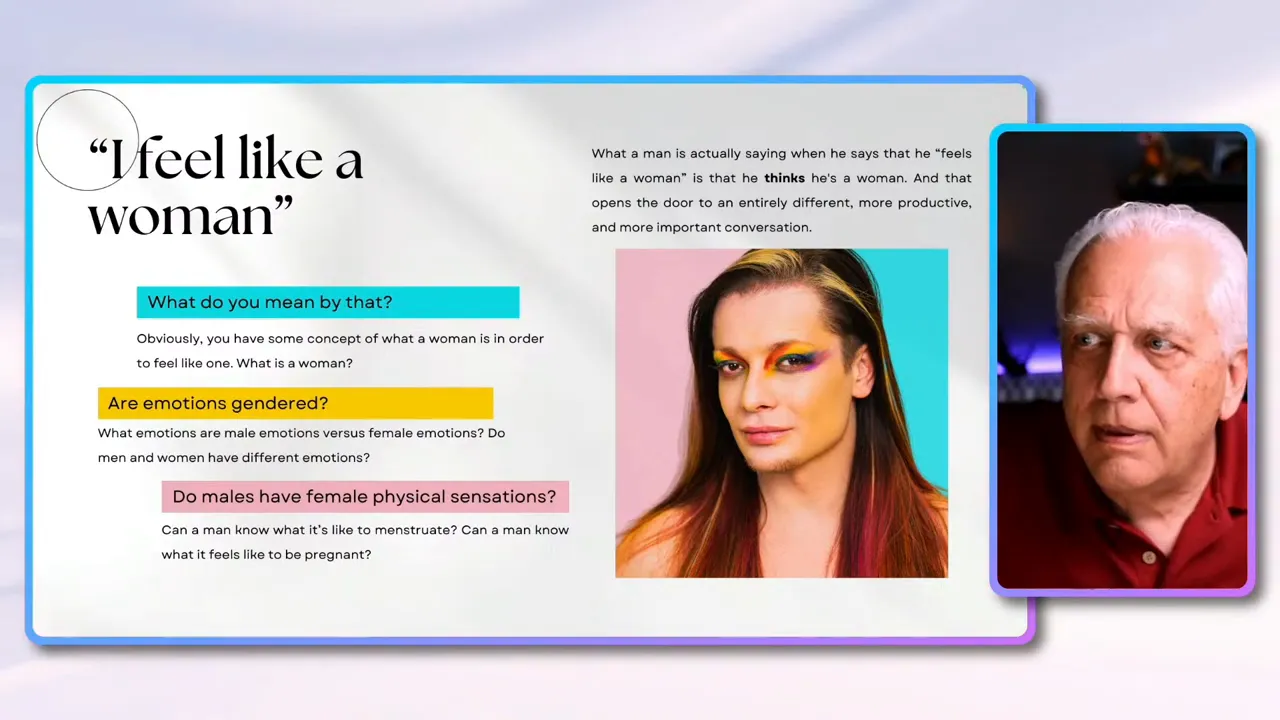
What do you mean by that?
Ask clarifying questions
When a biological male says he feels like a woman, then presumably he has some idea of what a woman is. Ask them to clarify: what is a woman?
If the term has no stable meaning, then the statement collapses. If it does have meaning, then that meaning needs to be identified.
The phrase “I feel like” raises more questions
Are emotions gendered? Are there specifically male emotions and specifically female emotions?
While men and women may express emotions differently, Kerry has never found an emotion his wife experiences that he does not also experience as a man. Joy, sadness, fear, affection, grief, frustration, tenderness. These are human emotions, not exclusively male or female emotions.
So if “I feel like a woman” is not about uniquely female emotions, then what is it about?
Is it about physical sensation?
If the claim is embodied, then more questions follow. Can a man know what menstruation feels like? Can he know what pregnancy feels like? If not, then what exactly is meant by the claim?
These are legitimate questions. They help move the Trans discussion out of vague language and into meaningful clarity.
A More Productive Way to Frame the Issue
When a man says, “I feel like a woman,” what he often really means is, “I think I am a woman.”
That shift matters. “I feel like” can hide behind emotional ambiguity. “I think I am” brings the issue into the realm of belief, meaning, and truth.
Once framed that way, the conversation becomes more productive. Now we are not merely dealing with a passing sensation. We are dealing with a conviction about identity. And convictions can be explored, tested, questioned, and discussed.
Who Decides? Why Philosophy Comes First
So who decides whether gender identity or biological reality should shape personal beliefs and cultural norms in the gender debate?
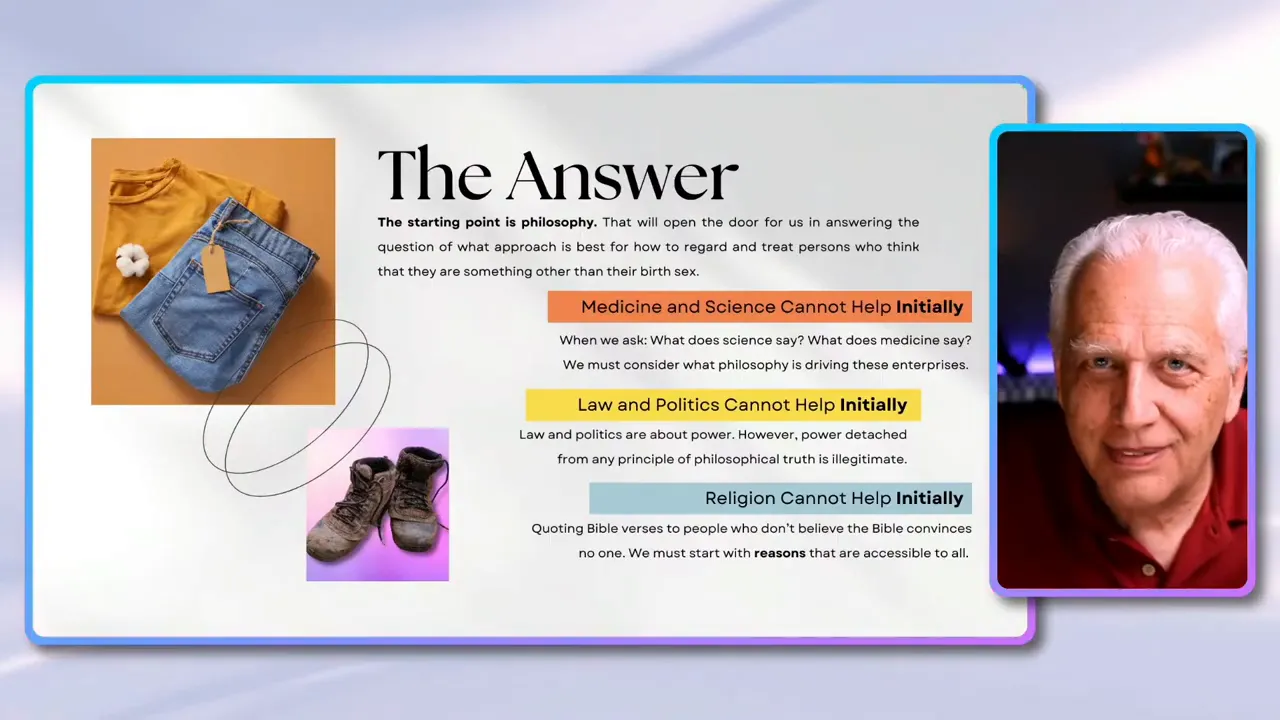
Surprisingly Kerry’s answer is: philosophy comes first.
Why philosophy?
Because before we can ask what medicine should do, what laws should permit, or what religious communities should teach, we have to ask more basic questions:
- What is a human being?
- What is truth?
- What counts as knowledge?
- What is the relationship between body and self?
- Should subjective identity override objective reality?
Those are philosophical questions.
Why not science or medicine first?
Science does not speak on its own. Scientists do. Medicine does not speak on its own. Medical practitioners do. And both scientists and practitioners operate from philosophical assumptions, whether acknowledged or not.
So, we have to examine the worldview driving the conclusions.
Why not law and politics first?
Law and politics are fundamentally about power. But power detached from truth is dangerous.
Power detached from any principle of philosophical truth is illegitimate, and it leads to tyranny.
That is why legal settlement alone cannot answer the question. A law can enforce behavior, but it cannot determine truth.
Why not religion first?
Although Kerry is a Christian minister he understands that quoting Bible verses to people who do not believe the Bible will not persuade them. If the goal is a meaningful conversation about Trans issues, then the starting point must be reasoning that is accessible to everyone.
That does not mean religion is irrelevant. It means public dialogue has to begin with arguments people can examine regardless of whether they share the same faith commitments.
Love Deeply, Think Clearly
Perhaps the most important thread running through this whole discussion is the refusal to separate truth from compassion.
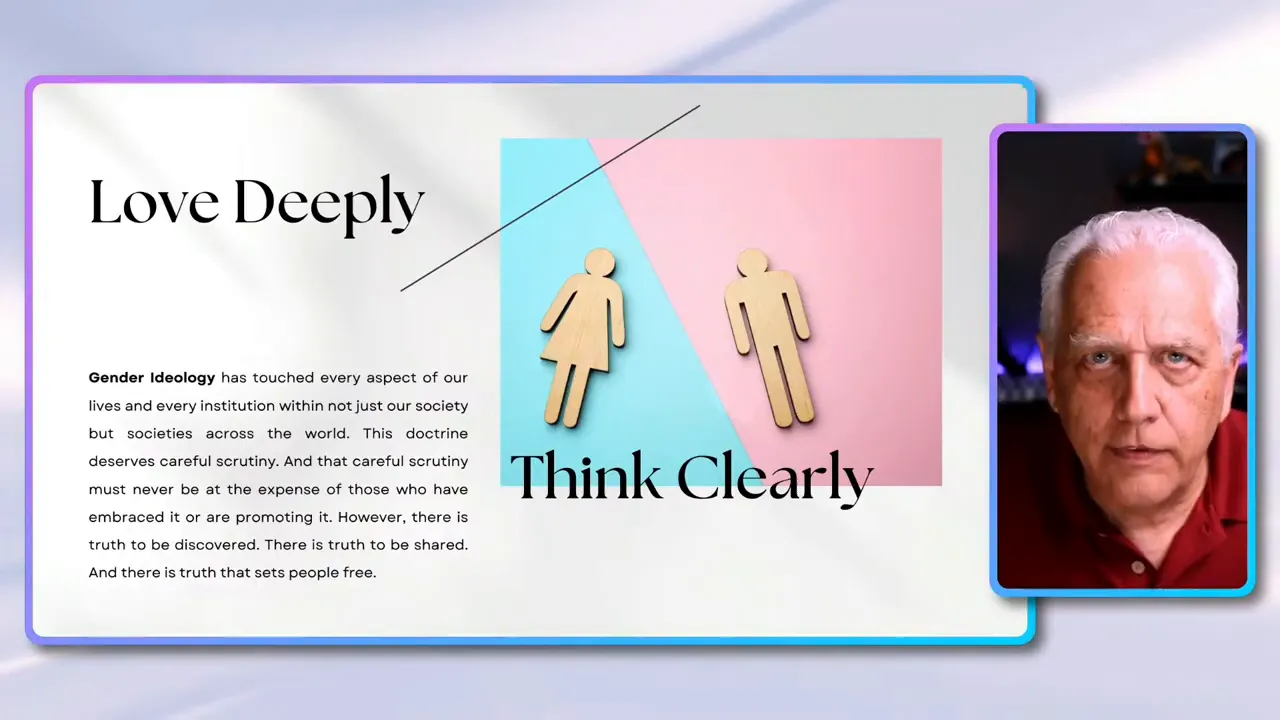
The doctrine of gender identity has touched nearly every institution in society. It deserves careful scrutiny. But that scrutiny must never come at the expense of the people caught up in it, advocating for it, or struggling under it.
Kerry’s conviction is that we must simultaneously:
- love deeply
- think clearly
That balance is necessary for a productive conversation. It is possible to ask hard questions without being harsh. It is possible to challenge ideas without being demeaning. It is possible to believe truth exists and still approach people with patience, gentleness, and dignity.
The Stakes Could Not Be Higher
The gender question is not going away. It affects families, schools, churches, medical institutions, legal systems, and relationships. Because of it's scope, the starting point matters immensely.
If we begin with slogans, we will stay confused. If we begin with power, we will become coercive. If we begin with unexamined assumptions, we will drift wherever culture pushes us.
However, if we begin by asking careful philosophical questions, by examining language, by distinguishing objective reality from subjective feeling, and by treating people with compassion, then we at least have a chance to move toward truth.
And for Kerry, that is the heart of the matter. There is truth to be discovered, truth to be shared, and truth that sets people free.
New Destiny Coaching can help YOU! |
|
Find out how... |
| Click Here |
