For years Pastor Kerry Decker of Beyond Trans has been helping people navigate life’s struggles with compassion and conviction. For those chasing the dream of transitioning it impacts every aspect of their life from family, faith, pain, hope, and the desire to feel whole. We need an approach that consists of both loving deeply and thinking clearly. Watch Kerry's broadcast.
Pastor Kerry has been coaching "Chris" (not his real name) for years. They have known each other for decades. Kerry performed Chris' wedding in 1978. Chris and his wife had four children. Then Chris came out as transgender, left his family, and began pursuing his transition. He described that path with a striking phrase: the yellow brick road.
That image captured the promise of a destination just ahead, the hope that the next step would finally deliver peace, and the heartbreak of finding out that the dream was not what it claimed to be. Chris was left without his family and was devastated because what he thought would make him feel whole left him empty.
The value of every Trans person
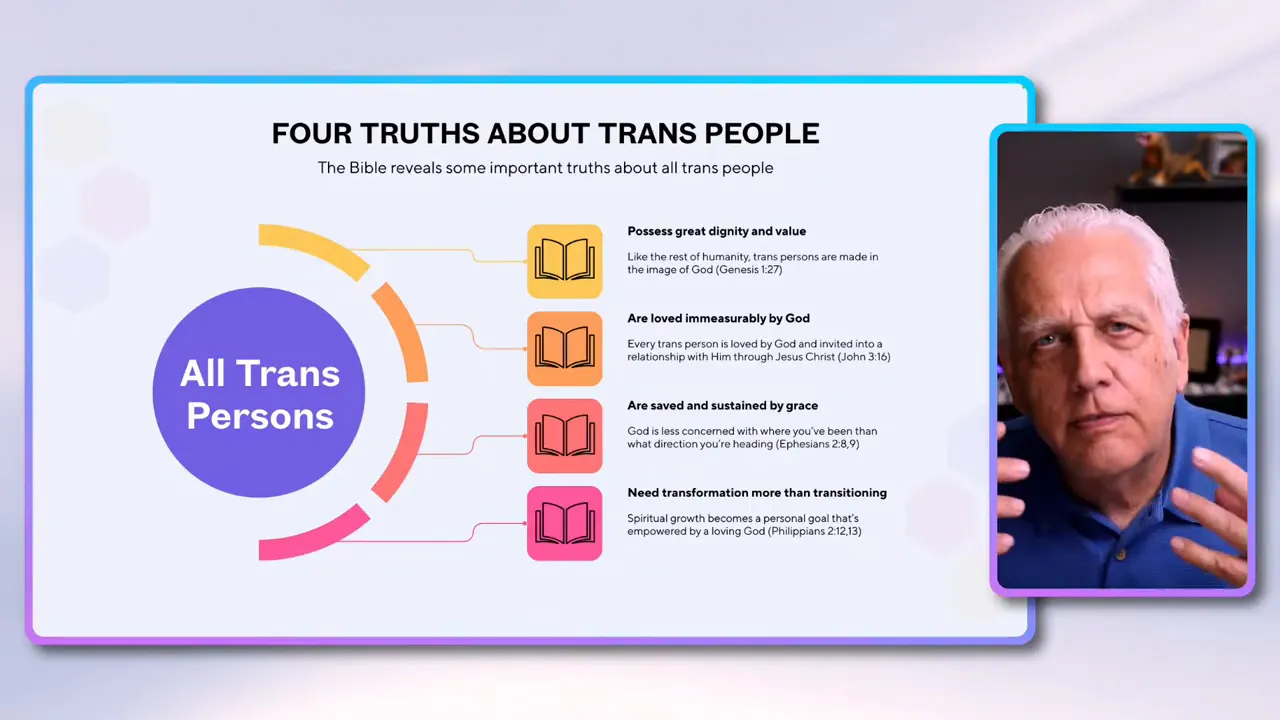
Before discussing transition, dysphoria, discipleship, or anything else, we need to settle something foundational. Every Trans person possesses real dignity and value. No exceptions.
Why? Because every human being is made in the image of God. That means mockery, contempt, and dehumanizing language have no rightful place in this conversation. If someone is struggling with gender dysphoria, they are not less human, less worthy, or less deserving of care.
This is not abstract theology. It shapes the posture we take. If we cannot approach people with humility and love, we have already failed before we make our first argument.
The goal is not to win a culture war. The goal is to respond in a way that honors both truth and the person we are ministering to. We do this when we:
- Love deeply
- Think clearly
- Speak truthfully
- Don't have contempt
God’s love is for Trans people too
Another truth is: all Trans people are loved immeasurably by God.
John 3:16 does not carve out exceptions. “For God so loved the world” includes every person living with confusion, loss, shame, brokenness, and longing. It includes people who feel disconnected from their bodies. It includes people who have already transitioned. It includes those who are questioning, those who regret, and those who are convinced they have found the answer.
Many assume the claims of Christianity automatically mean rejection. They do not. The Christian message begins with love. God reaches toward broken people, not away from them.
If you are thinking about the Trans issue through a Christian lens, this has to remain central: no one is beyond the reach of grace.
Understand grace before you talk about change
When a person comes to Christ, they are saved and sustained by grace. That is true of every Christian, including a Trans Christian.
Pastor Kerry has ministered to drug addicts, alcoholics, people trapped in sexual addiction, survivors of trafficking and exploitation, and Christians dealing with same-sex attraction. Across all those stories, one lesson stands out: God is often less concerned with where someone has been than with the direction they are heading.
That perspective changes how we think about spiritual growth. People do not all begin in the same place. One person may feel far along in maturity. Another may be taking their first shaky steps. But discipleship is about movement toward Christ.
Trans Christians, like all Christians, need transformation more than transition. We all need our minds renewed. We all need our desires, fears, habits, and identities brought under the lordship of Christ. None of us outgrow that need.
Find hope in this promise, "He who began a good work in you will carry it on to completion" Philippians 1:6b. That includes long, complicated, painful stories.
Stages of the transition journey
To think clearly about a Trans journey, it helps to understand the process many people follow. The general path often includes these elements:
- Gender dysphoria or persistent distress related to one’s gender
- Social transition, such as a new name, appearance, or presentation
- Legal transition, including changes to documents and records
- Hormone therapy
- Surgeries, whether primary procedures or secondary ones
- Post-transition life
Chris walked through the full spectrum of that process over many decades. His story is not theoretical. He socially transitioned, legally transitioned, pursued hormone replacement therapy, underwent surgeries, and eventually arrived at post-transition life. He walked the whole "yellow brick road."
Five stages in the transition journey
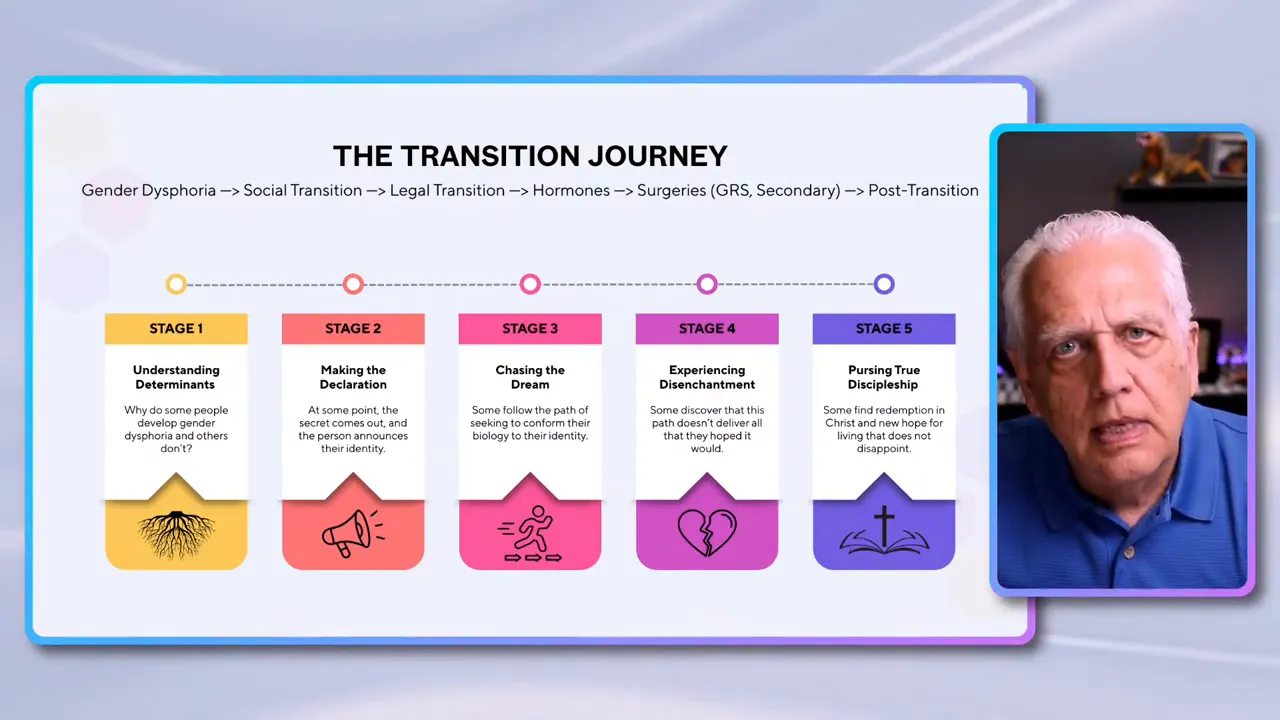
Kerry highlights five stages that Chris went through that are fairly universal throughout the Trans community.
1. Understanding the determinants
What happened before the gender dysphoria? Understanding what role nature/nurture played. What factors shaped their identity?
2. Making the declaration
This is the tipping point. The hidden struggle becomes public. The person announces a new identity and begins moving in a new direction.
3. Chasing the dream
This is where the pursuit accelerates. The belief takes hold that if biology can be brought into line with identity, peace will finally arrive.
4. Experiencing disenchantment
For some, the dream does not deliver. The hoped-for resolution proves incomplete or absent altogether.
5. Pursuing true discipleship
In Chris’ case, this is where redemption enters the story in a deeper way. The question becomes not “How do I keep constructing a new self?” but “How do I follow Christ honestly from where I am?”
Two major approaches to gender dysphoria
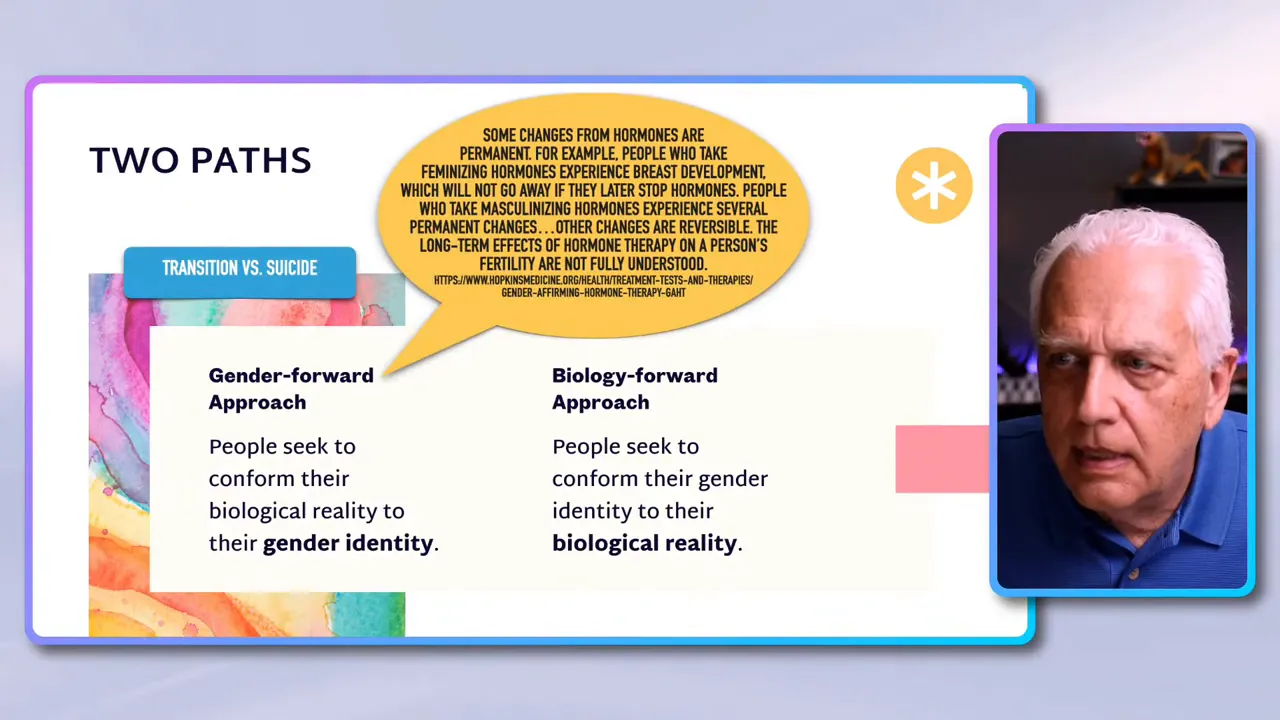
There are two ways people tend to approach gender dysphoria.
Gender-forward approach
This approach seeks to conform biological reality to gender identity. It is the dominant approach in today’s culture. Social transition, legal changes, hormones, and surgeries all fit inside this framework.
Biology-forward approach
This approach seeks to conform gender identity to biological reality. In many places, it has fallen out of favor. But it deserves a second look.
Why does this matter? Because in many current conversations, the Trans issue is framed as though only one path is morally acceptable or psychologically survivable. Pastor Kerry does not believe that is true. Presenting transition as the only compassionate option oversimplifies a very serious matter.
Too often, people are told some version of this: embrace the gender-forward path or prepare for catastrophe. That kind of rhetoric can pressure parents and individuals into decisions under fear rather than wisdom.
Question the promise that transition solves everything
One of the most sobering realities in Chris’ story is that transition did not end his suffering. After coming out and pursuing transition, he made about seven suicide attempts. For Chris the dream had become a nightmare.
Not every Trans person has the same outcome but we should be cautious about making sweeping claims. It is simply not true that transition guarantees peace, eliminates despair, or resolves inner conflict.
Language can shape expectations in powerful ways. Terms like “gender-affirming care” sound positive. The wording itself can bias the conversation. Neutral thinking is difficult when the language assumes the conclusion.
Clear thinking is essential. The promise attached to transition is often larger than what transition can actually deliver.
A peek behind the curtain, how the dream is sold
Imagine this process like trying to bake a pie by following instructions from Instagram. You see the finished pie in the video and it looks perfect. You get the list of ingredients and a sequence of steps. The message is simple: follow the recipe and you will get the same beautiful result. But the whole process is edited down and you are only seeing the polished highlights.
The same thing can happen in the Trans journey. A person struggling with dysphoria is shown a path and told, in effect:
- Take this first step
- If that does not satisfy, take the next one
- If peace still feels out of reach, go farther
- Eventually the pieces will all come together
At first, there may even be euphoria. Chris described exactly that. Once he decided to come out and pursue transition, he felt an overwhelming rush and ran down that road as fast as he could.
Then comes social reinforcement. In his case, after leaving his family he found a community in San Francisco that celebrated his decision. He was affirmed, welcomed, and even invited into modeling in that new world. To someone who is aching for validation, that kind of acceptance feels intoxicating.
It becomes very easy to believe you are finally becoming your true self. But very rarely does expectation match reality.

Facing the cost of chasing the yellow brick road
Dreams are judged by where they lead. Chris later reflected on his life with painful clarity:
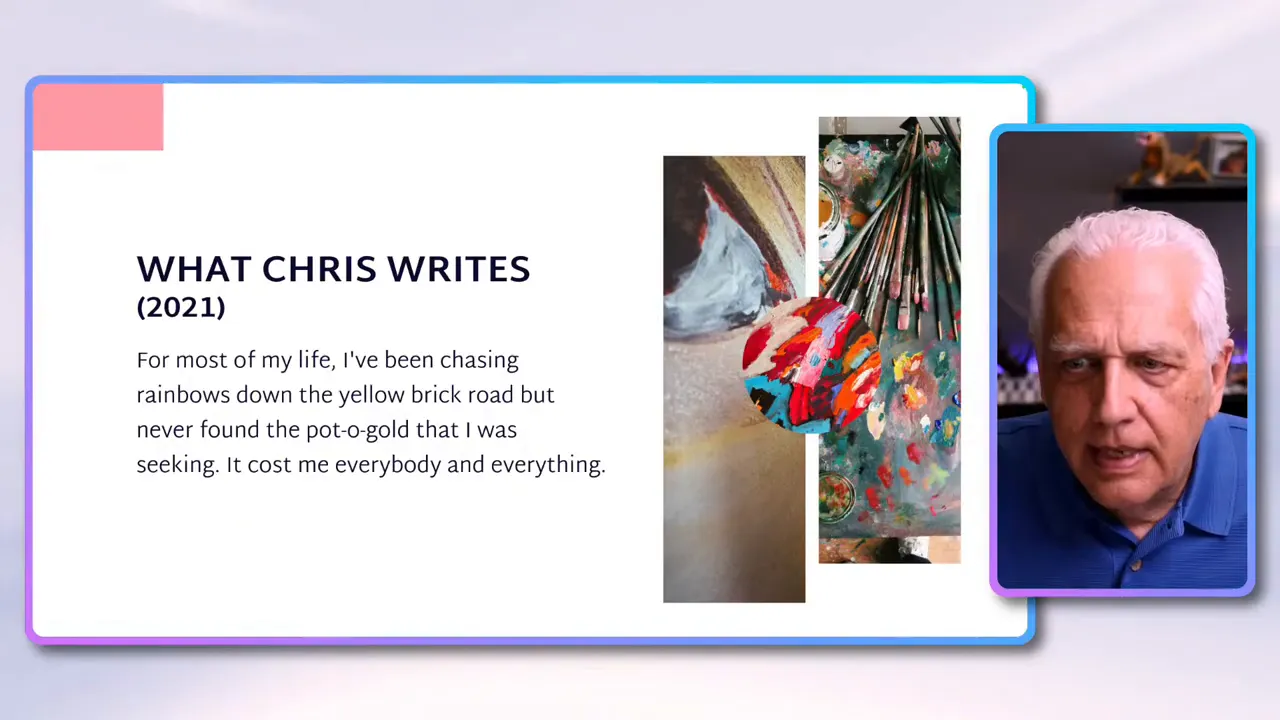
For most of my life, I’ve been chasing rainbows down the yellow brick road, but never found the pot of gold that I was seeking. It cost me everybody and everything.
That cost included the loss of his marriage, loss of contact with his children, estrangement from his family, and deep emotional suffering. This is what disenchantment looks like. Not every Trans journey unfolds the same way, but this story is a warning against romanticizing transition as a guaranteed answer.
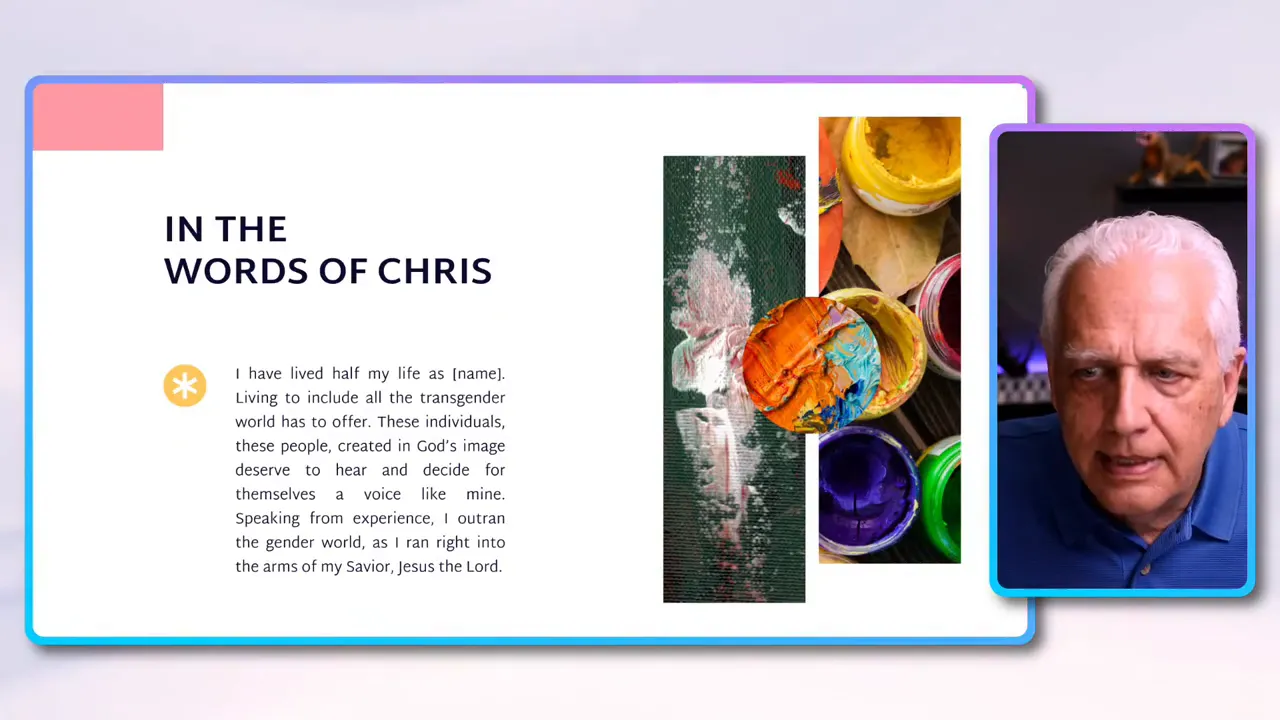
Later Chris wrote words that reveal where his search ultimately turned:
I have lived half my life as my new identity, living to include all the transgendered world has to offer. These individuals, these people created in God’s image, deserve to hear and decide for themselves a voice like mine. Speaking from experience, I outran the gender world as I ran right into the arms of my Savior, Jesus Christ.
That is not the voice of someone speaking from a distance. That is the voice of someone who went all the way down the road and found that Christ, not transition, was the only place solid enough to stand.
Hope for redemption for every Trans story
Trans sins, wounds, or confusions are not in some way more sinful to God. Everyone needs redemption. Everyone needs grace. Everyone needs a Savior. God redeems all kinds of people, and He redeems all kinds of pain.
God is not only in the business of redeeming souls He is also able to redeem suffering. He brings beauty from ashes. God can restore a person after decades of confusion, regret, loss, and failed promises. He can restore hope whereas the yellow brick road ends in disappointment.
If you are helping someone who has questions about transitioning hold onto compassion and hold onto truth. Resist mockery. Resist slogans. Resist easy answers. Be a trustworthy guide. Stay close to Scripture. And hold onto the hope that no life is too tangled for the mercy of God.
Chasing after God is the best road. You can connect with Pastor Kerry at Beyond Trans.
New Destiny Coaching can help YOU! |
|
Find out how... |
| Click Here |
